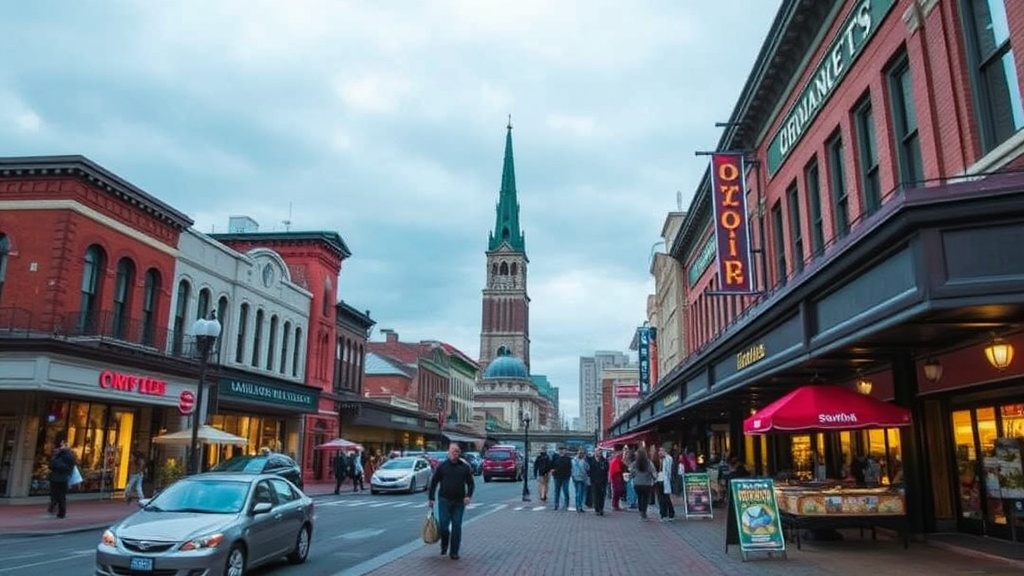
Which Walking Routes Show You the Real ByWard Market?

Which streets offer the most scenic walking routes through ByWard Market?
There's something special about exploring ByWard Market on foot that you simply can't replicate any other way. When you walk these streets, you notice the architectural details on heritage buildings, catch snippets of conversation in multiple languages, and discover shortcuts that shave precious minutes off your daily commute. This guide maps out the walking routes that locals actually use—not the tourist trails, but the paths that connect us to our neighbourhood's character and history.
Start your morning along Sussex Drive for one of the most visually striking walks in ByWard Market. This stretch runs parallel to the Ottawa River and offers views that change dramatically with the seasons. In spring, the tulip beds near the National Gallery burst into colour. Summer brings street performers and artists setting up easels along the sidewalk. Fall transforms the tree canopy into a tunnel of red and gold. And winter—well, winter gives you that crisp, quiet atmosphere that makes a hot coffee from one of the nearby cafés taste even better.
William Street presents another favourite route for ByWard Market residents. It's narrower than the main thoroughfares, which creates an intimate, almost European feel. The cobblestone sections slow your pace naturally, forcing you to look up at the second and third-story architectural details that most people miss when they're driving through. You'll pass by the historic ByWard Market Building on your way—the red-brick structure that's anchored this neighbourhood since 1926. Even if you're not shopping for produce, walking through the building's corridors connects you to decades of local commerce and community gathering.
Where can you find quiet pedestrian paths away from the main crowds?
Not every walk in ByWard Market needs to navigate through bustling crowds. Sometimes you want a peaceful route for phone calls, podcast listening, or simply clearing your head. Clarence Street East offers exactly that kind of escape. While the western sections near the nightlife district get lively after dark, the eastern stretch maintains a residential calm that's perfect for a contemplative evening stroll. The tree coverage here is more mature, and the pace noticeably slower.
The laneways and passages between the major streets hide some of ByWard Market's best-kept pedestrian secrets. York Street's connection through to Parent Avenue creates a diagonal shortcut that few tourists discover. These back routes feel like you're walking through someone's neighbourhood—because you are. You'll spot community gardens tucked behind apartment buildings, local residents walking their dogs on familiar loops, and the occasional piece of street art that only makes sense if you know the local references.
St. Patrick Street provides another underappreciated walking corridor through ByWard Market. It runs at a slight angle to the grid pattern, which gives it a different energy than the north-south streets. The mix of heritage homes and newer infill development tells the story of how this neighbourhood has evolved while maintaining its essential character. Walking here in the early morning, you'll see the same faces at the same bus stops—the daily rituals of people who call this place home.
What routes connect you to ByWard Market's living history?
ByWard Market carries layers of history that reveal themselves when you know where to look. A walk down Murray Street connects you to the neighbourhood's working-class roots. This was where loggers, market vendors, and canal workers lived in the 19th century. Today, the street maintains that practical, unpretentious character even as the businesses have evolved. The low-rise brick buildings here survived the urban renewal projects that transformed other parts of the city, which means you're walking past genuine architectural history.
The route from Major's Hill Park down through ByWard Market to the Ottawa River pathway traces the original commercial corridor that established this neighbourhood. Before Confederation, this was where farmers brought their goods to sell, where workers bought their supplies, and where the city took shape. Walking this path today, you're following in footsteps that stretch back nearly two hundred years. The National Capital Commission maintains Major's Hill Park as both a green space and a historical site, making it an ideal starting point for understanding how this area developed.
George Street offers another historical walking route through ByWard Market, though its character has shifted over the decades. What was once primarily residential became commercial, then entertainment-focused, and now finds a balance between those uses. The heritage designation on many buildings here means that even as businesses change, the streetscape maintains its 19th-century proportions. That matters for pedestrians—the narrow sidewalk-to-building ratio creates the kind of human-scaled environment that modern urban planners try to replicate but rarely achieve.
How do locals navigate ByWard Market on foot through every season?
Walking in ByWard Market isn't just a fair-weather activity. Locals know that the neighbourhood's compact scale makes it perfectly suited to pedestrian life year-round. The key is knowing which routes stay cleared in winter, which offer shade during humid July afternoons, and which provide the quickest connections to transit when you're running late.
The Rideau Canal Skateway—the world's largest naturally frozen skating rink—transforms winter walking routes in ByWard Market. When the canal freezes, the pathways alongside it become corridors for skaters walking to their entry points. Even if you're not skating, the energy along these routes is infectious. The National Capital Commission provides regular updates on ice conditions, and locals time their commutes to catch the golden hour when the setting sun reflects off the ice.
Rainy days call for covered routes, and ByWard Market delivers. The ByWard Market Building itself offers a covered passageway that connects multiple streets. The arcade-style entrances on George Street let you cut through while staying dry, emerging near the heritage architecture that defines the neighbourhood's visual character. Similarly, the cluster of businesses around Clarence and York creates natural covered walking paths where you can move between blocks with minimal exposure to the elements.
Summer heat sends locals seeking shade routes through ByWard Market. The tree canopy along Cumberland Street provides natural air conditioning during August heat waves. Early morning walkers gravitate toward the eastern sections of the neighbourhood where buildings cast long shadows across the sidewalks. And the connection to Confederation Park offers both shade and the possibility of a cooling fountain break.
The practical walking routes matter just as much as the scenic ones. Locals know that getting from the transit stations at Rideau Centre to the residential streets west of ByWard Market fastest means cutting through the covered walkways rather than staying at street level. The pathway network that connects to the Rideau Canal UNESCO World Heritage Site provides not just recreation but genuine transportation options for people who work in the area.
Every walk through ByWard Market reinforces why this neighbourhood has remained one of Ottawa's most walkable districts for generations. The grid pattern established in the 19th century still serves us well today. The mix of residential, commercial, and institutional uses means there's always something to look at, someone to greet, or a new detail to notice. Whether you're walking for exercise, commuting to work, or simply exploring the place you call home, these routes connect you to the ongoing story of our community. ByWard Market rewards the pedestrian who pays attention—and punishes the one who rushes through without looking up.